All accessories

Decanter buying guide

Best wine decanters (2026)

A good decanter does two simple things: it lets a young red breathe, and it separates wine from sediment in older bottles. The right one can completely change what a $20 Cabernet tastes like. Start with the pick that matches your budget and how often you actually pour bold reds.

Quick picks

The decanter picks worth clicking first

Three clear buying paths: entry-level, dinner-party centerpiece, and premium gift. No live prices or ratings, just the use case that should drive the decision.

Disclosure: Corkly may earn a commission from qualifying purchases through affiliate links at no extra cost to you. We choose picks for usefulness and fit, not for live prices or ratings.

Best value

Riedel Veloce Crystal Decanter

Best for: A first real decanter without overspending

Classic wide bowl, lead-free crystal, and the easiest recommendation for most readers who want a visible upgrade under the luxury tier.

View on Amazon

Dinner-party pick

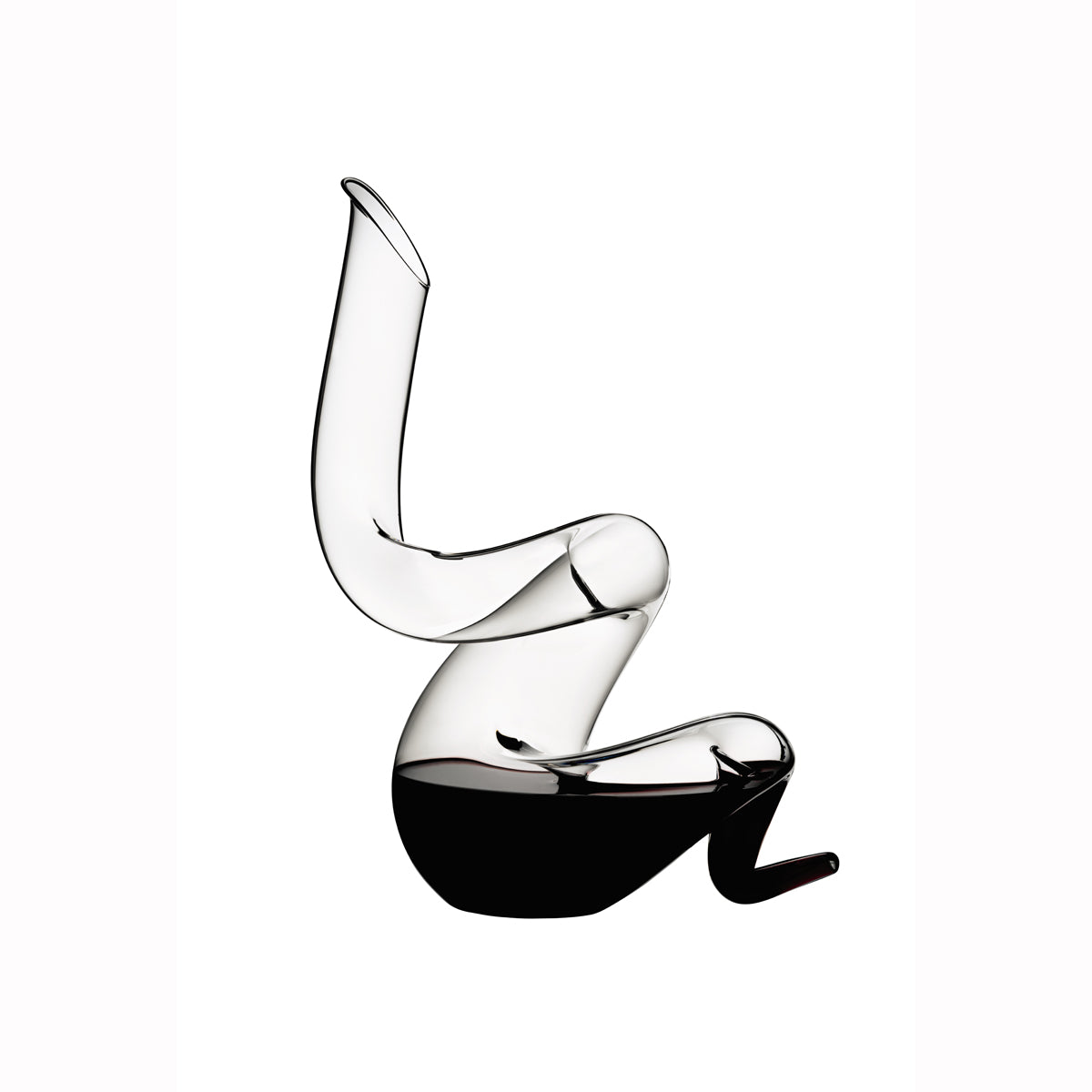
Riedel Boa Decanter

Best for: A sculptural pour that still works hard

It looks like a centerpiece, but the long neck and broad aeration path make it genuinely useful for bold young reds.

View on Amazon

Splurge gift

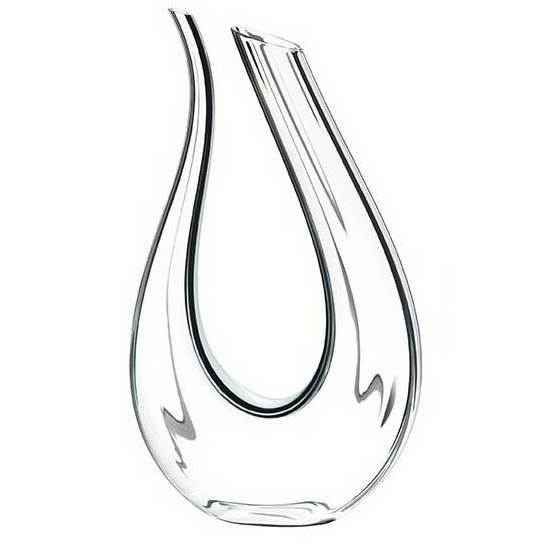
Riedel Fatto a Mano Amadeo

Best for: Collectors, weddings, and milestone bottles

Hand-blown, dramatic, and gift-worthy. This is the premium option for readers already willing to buy a showpiece.

View on Amazon
The picks

Three decanters, three budgets

You do not need to spend $400 to decant a bottle properly. You just need a vessel with a wide bowl and a long neck. These three nail it at three very different prices.

Riedel Veloce crystal wine decanter
Best valueRiedel

Veloce Crystal Decanter

Best for: everyday Cabernet, Malbec, and Syrah

The smartest entry-level buy. Lead-free crystal, a clean teardrop shape, and enough surface area to aerate any bold red.

  • Wide bowl for real aeration
  • Easy entry point
  • Clean classic shape
  • Less dramatic than Riedel pieces
View on Amazon
Riedel Boa coiled crystal wine decanter
Designer favoriteRiedel

Boa Decanter

Best for: hosts who want a centerpiece

Sculptural serpent shape with a long, controlled pour. Aerates beautifully and doubles as a centerpiece for dinner parties.

  • Statement design
  • Controlled pour
  • Strong gift appeal
  • More delicate to clean
View on Amazon
Riedel Fatto a Mano Amadeo harp-shaped wine decanter
Premium pickRiedel

Fatto a Mano Amadeo

Best for: special bottles and premium gifts

Hand-blown by Riedel's master glassmakers. The dramatic curves give serious wines room to open up.

  • Hand-blown showpiece
  • Built for serious reds
  • Gift-worthy presentation
  • Only makes sense if you want a splurge
View on Amazon

For older reds: add a sediment filter

With aged Cabernet, Barolo, or Bordeaux, sediment can muddy your glass. Set a stainless steel sediment filter over the mouth of your decanter as you pour. It catches what you do not want without slowing you down.

How long should you decant?

The rule of thumb: the younger and more tannic the wine, the longer it benefits from a decant. Here is a starting point, but always taste as you go.

Wine styleDecant timeWhy
Young Cabernet, Malbec, Syrah45-60 minutesTannins soften noticeably; dark fruit opens up.
Bordeaux & Bordeaux blends30-60 minutesDecant and taste every 15 minutes - sweet spot moves fast.
Young Pinot Noir15-20 minutesA short decant just to brighten aromatics.
Older reds (10+ years)5-15 minutesDecant gently - mostly to remove sediment.
Most whites & roseSkipAromatics fade with too much air.

Decanter FAQ

Is a decanter the same as a carafe?

Close, but no. A carafe is just a serving vessel. A decanter is shaped specifically to maximize the wine's contact with air - wide bowl, narrow neck - and to make it easy to pour off sediment.

Can you decant white wine?

Most of the time, no. Delicate white aromatics dissipate quickly. The exception: bold, oaked whites like white Burgundy or aged Riesling, which can benefit from 10-15 minutes in a decanter.

Do I need a decanter if I have an aerator?

They do different jobs. An aerator force-mixes air in seconds; a decanter lets oxygen do its work slowly over 30-60 minutes. For young, tannic reds, a slow decant is usually a more pleasant experience, but an aerator is faster. Compare aerators vs decanters.

How do I clean a decanter without scratching it?

Skip the dishwasher. The simplest method is a long-handle brush, stainless steel cleaning beads, and a microfiber polishing cloth - in that order. Full cleaning guide.

Pour. Wait. Taste the difference.

Try the same bottle decanted and not decanted, side by side. It is the fastest way to understand what oxygen actually does to a wine.